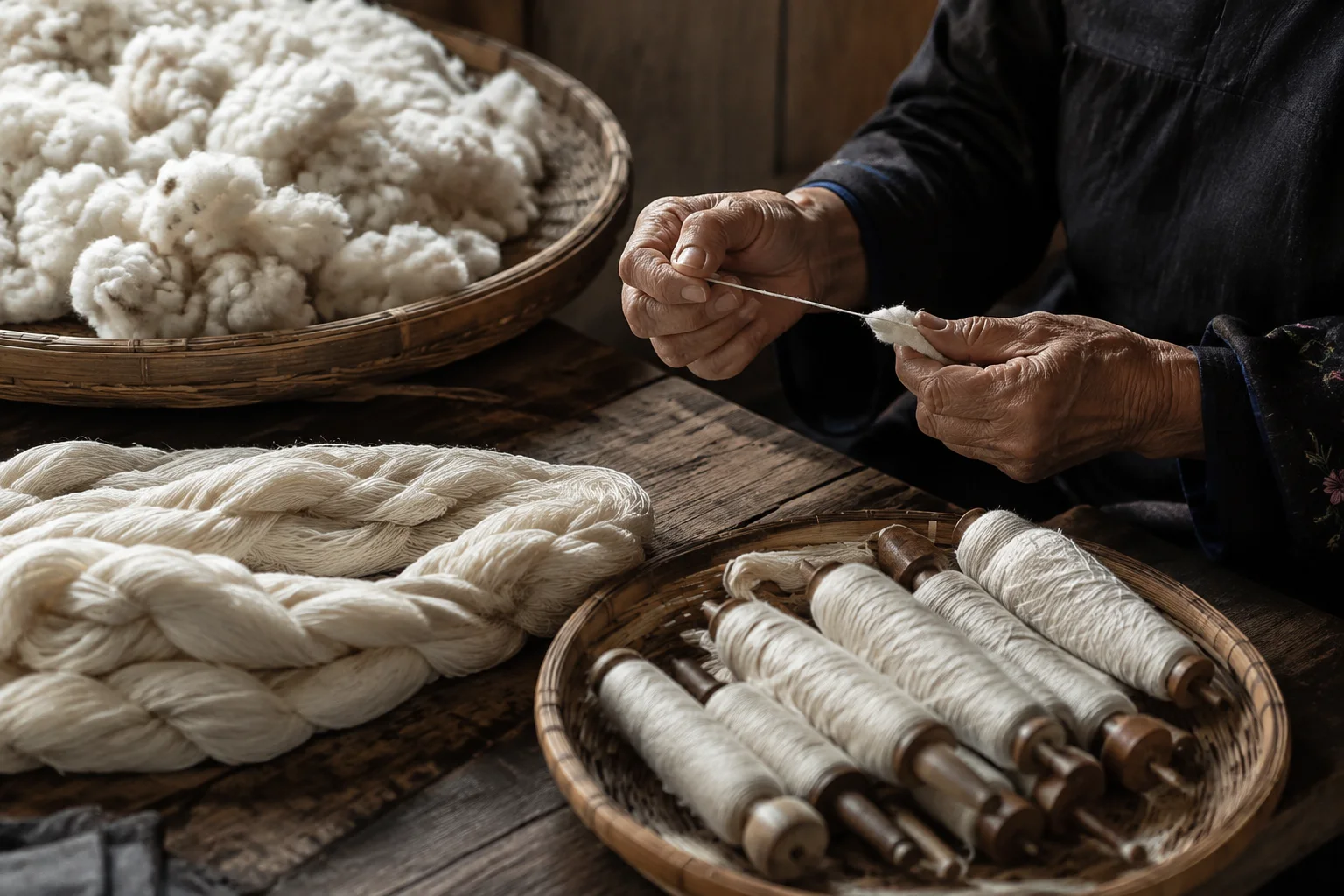
The fibre
Cotton fibre is cleaned, drawn and wound into usable thread. Even before weaving begins, the material passes repeatedly through the hands.
The craft · Tongdao, Hunan
Dong brocade is a woven textile carried by generations of Dong women in southwest China. Its patterns are counted thread by thread and held in memory, passed from one weaver to the next.
Cotton fibre is cleaned, drawn and wound into usable thread. Even before weaving begins, the material passes repeatedly through the hands.
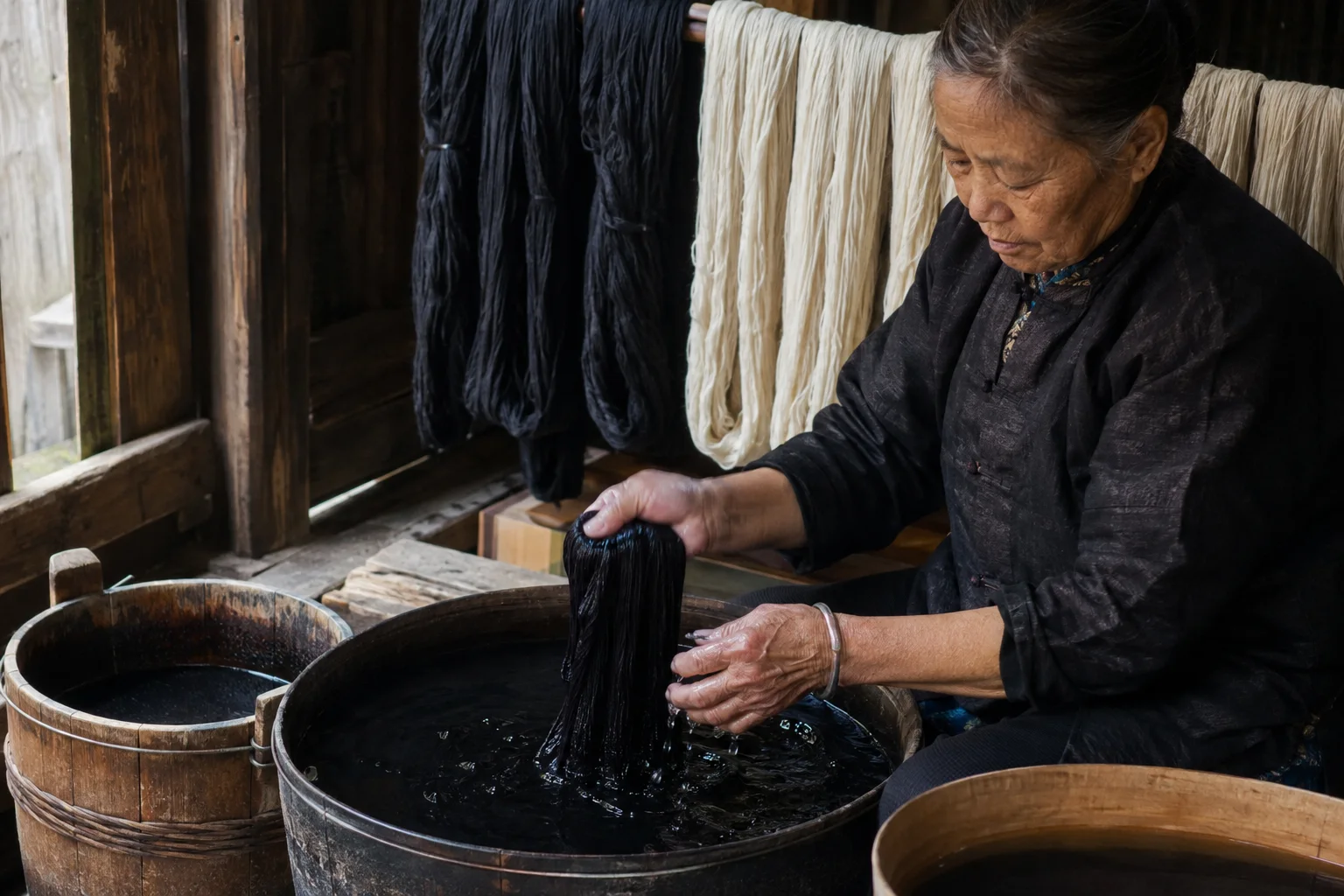
Cotton yarn is prepared in a restrained palette. Colour is established before the structure of the pattern can emerge.
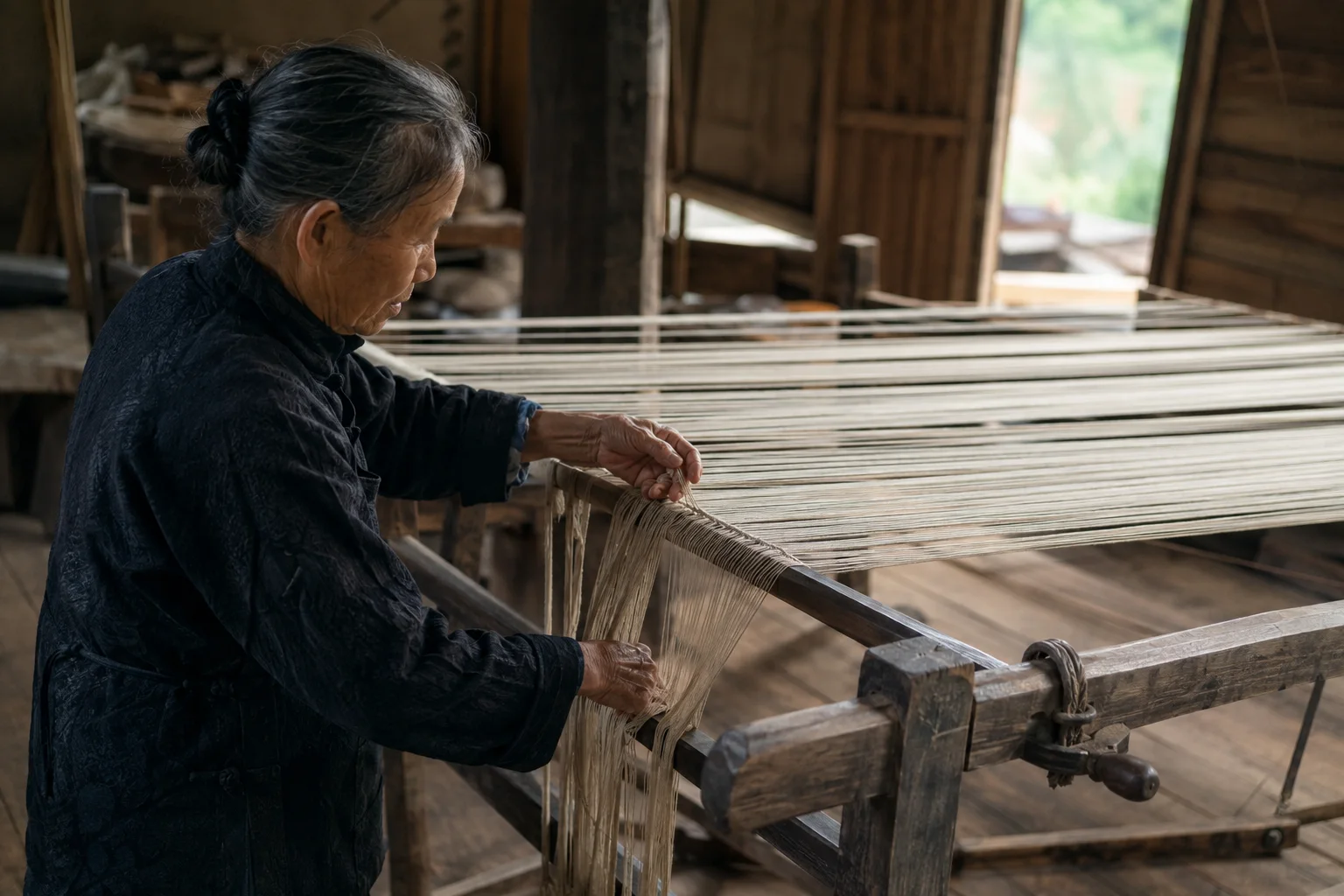
Threads are measured, counted and tensioned. A small error here can travel through the entire length of cloth.
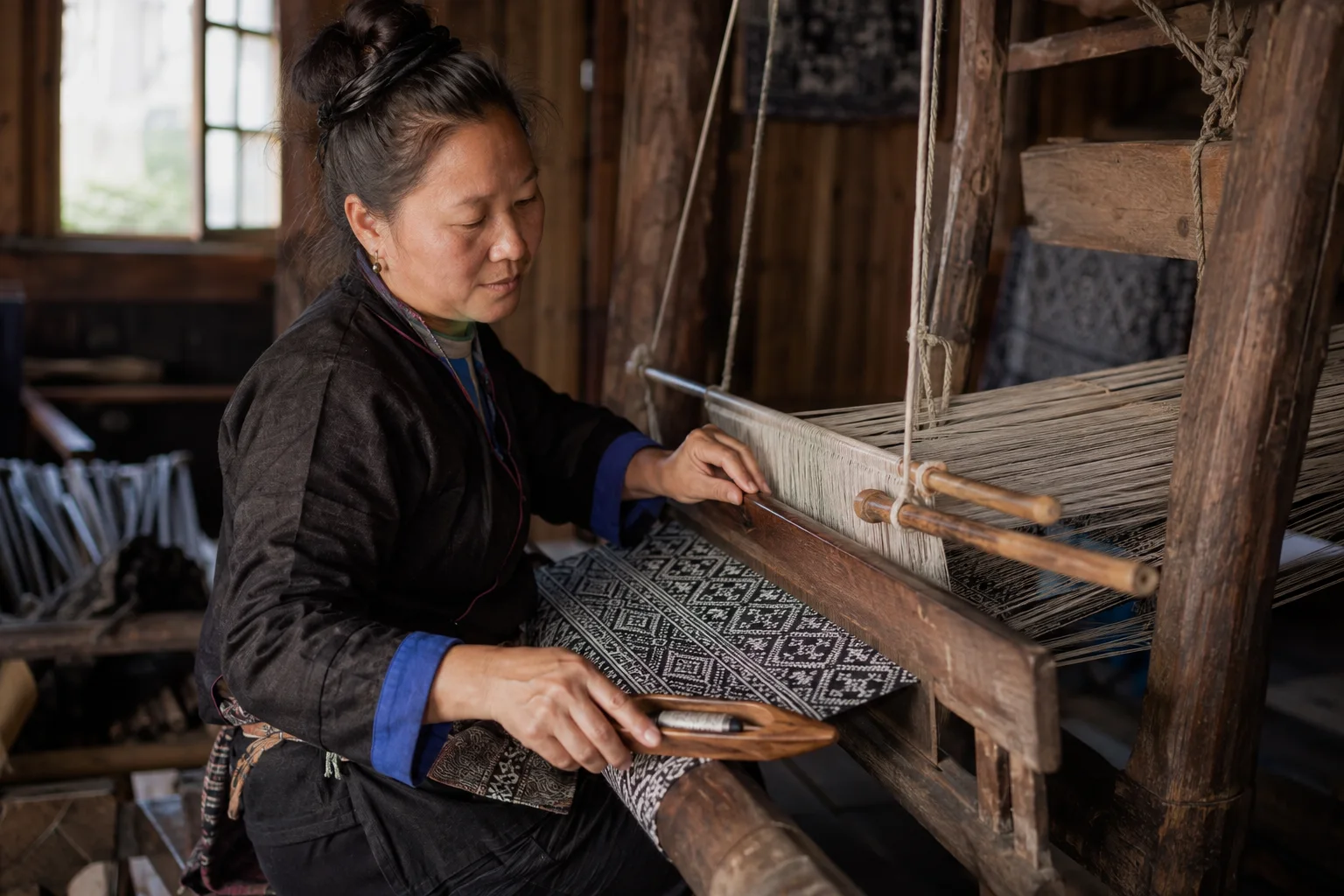
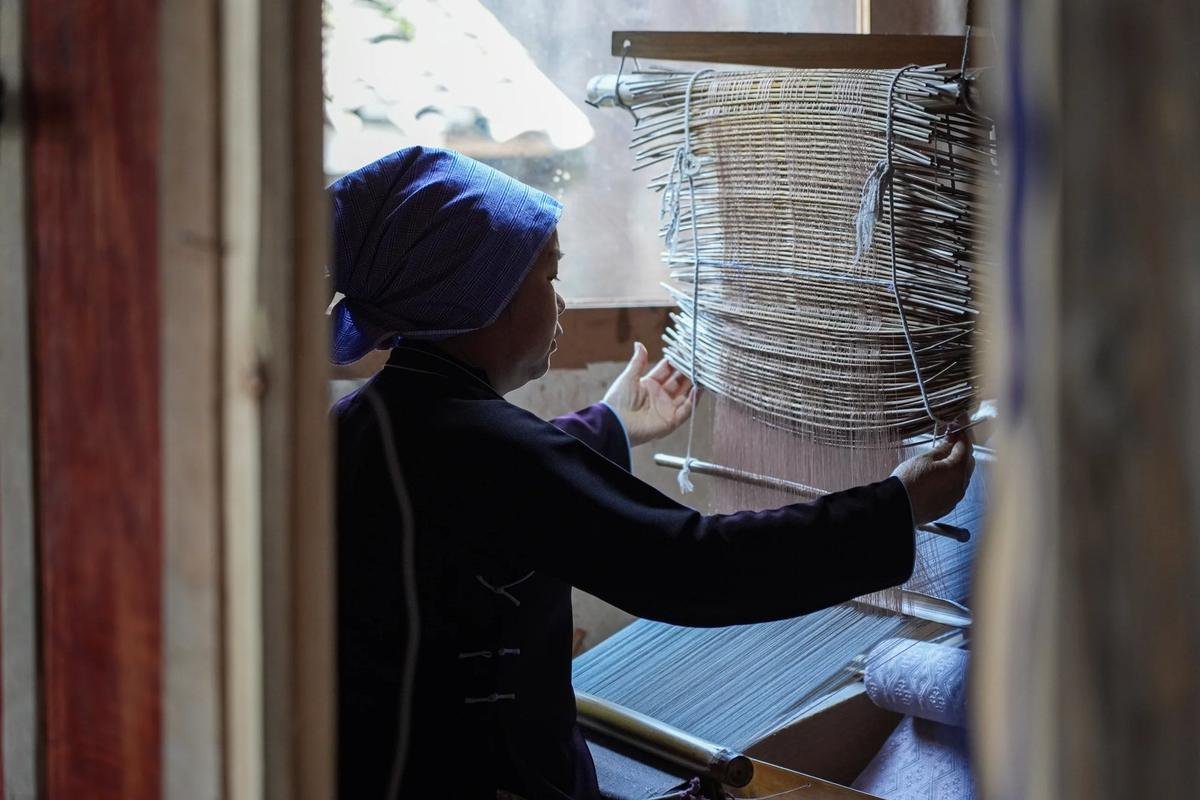
At the wooden loom, the shuttle builds the ground while selected threads form the geometric motif, one passage at a time.
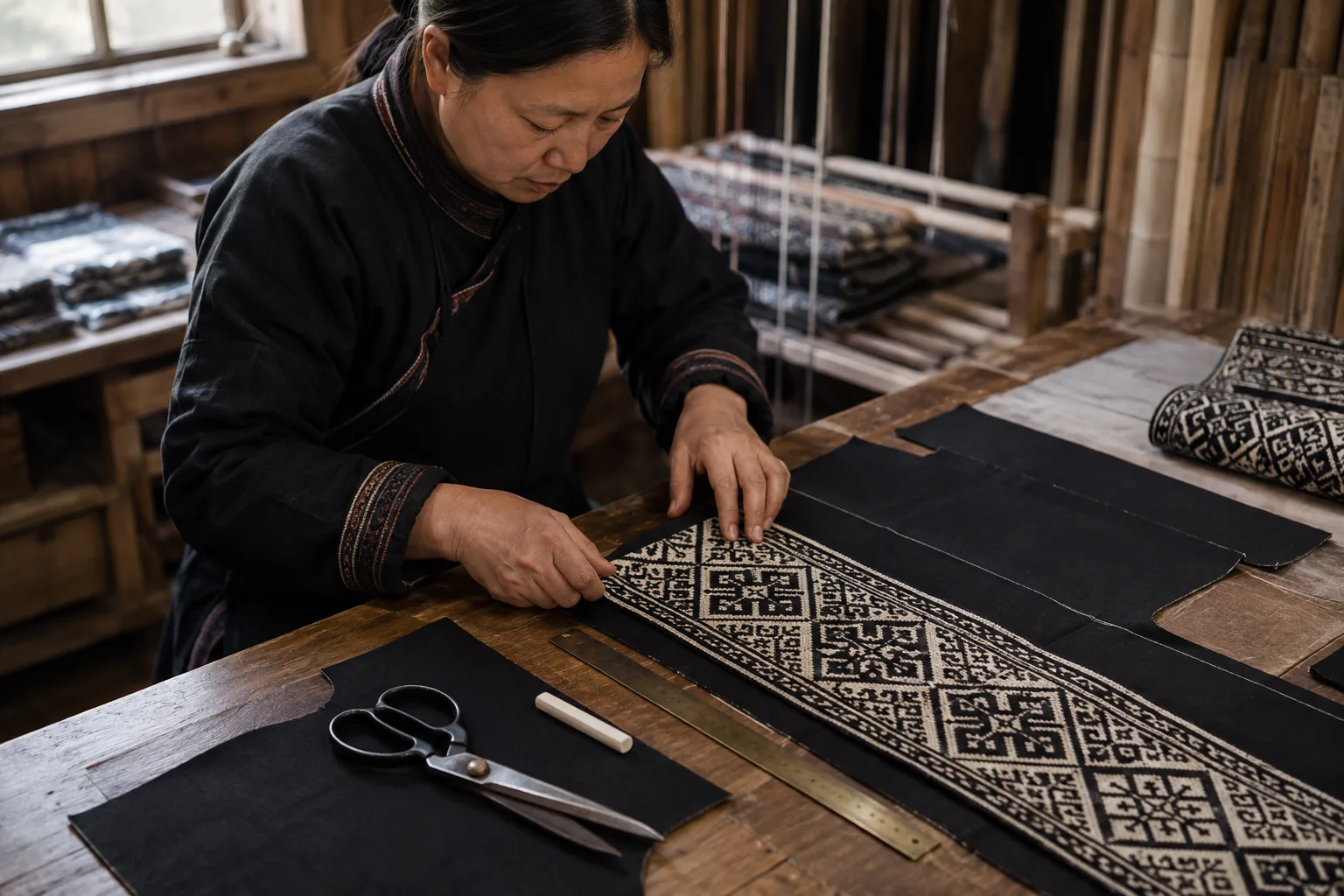
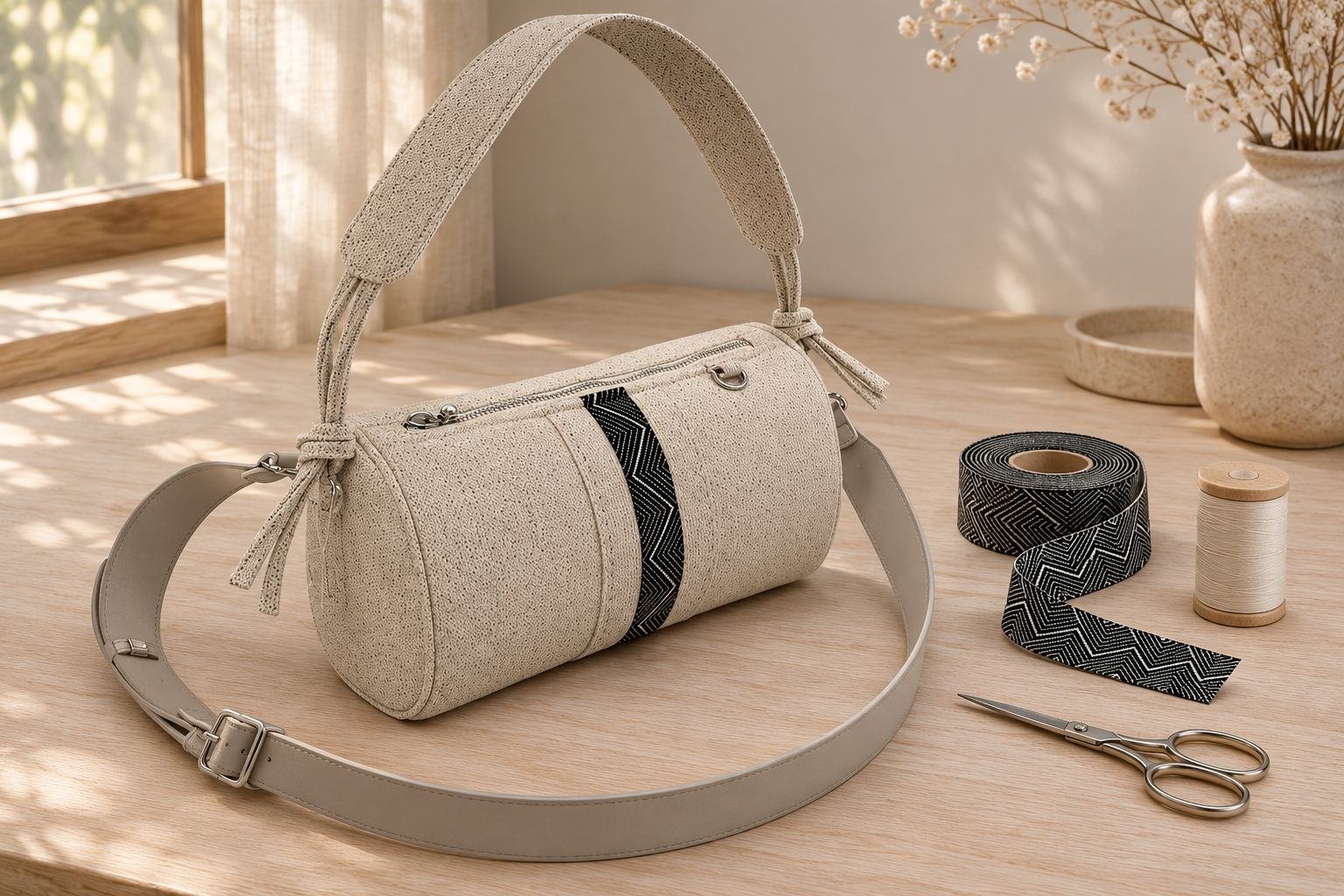
The finished brocade is read like a composition. Motifs are aligned with the product pattern before a cut is made.
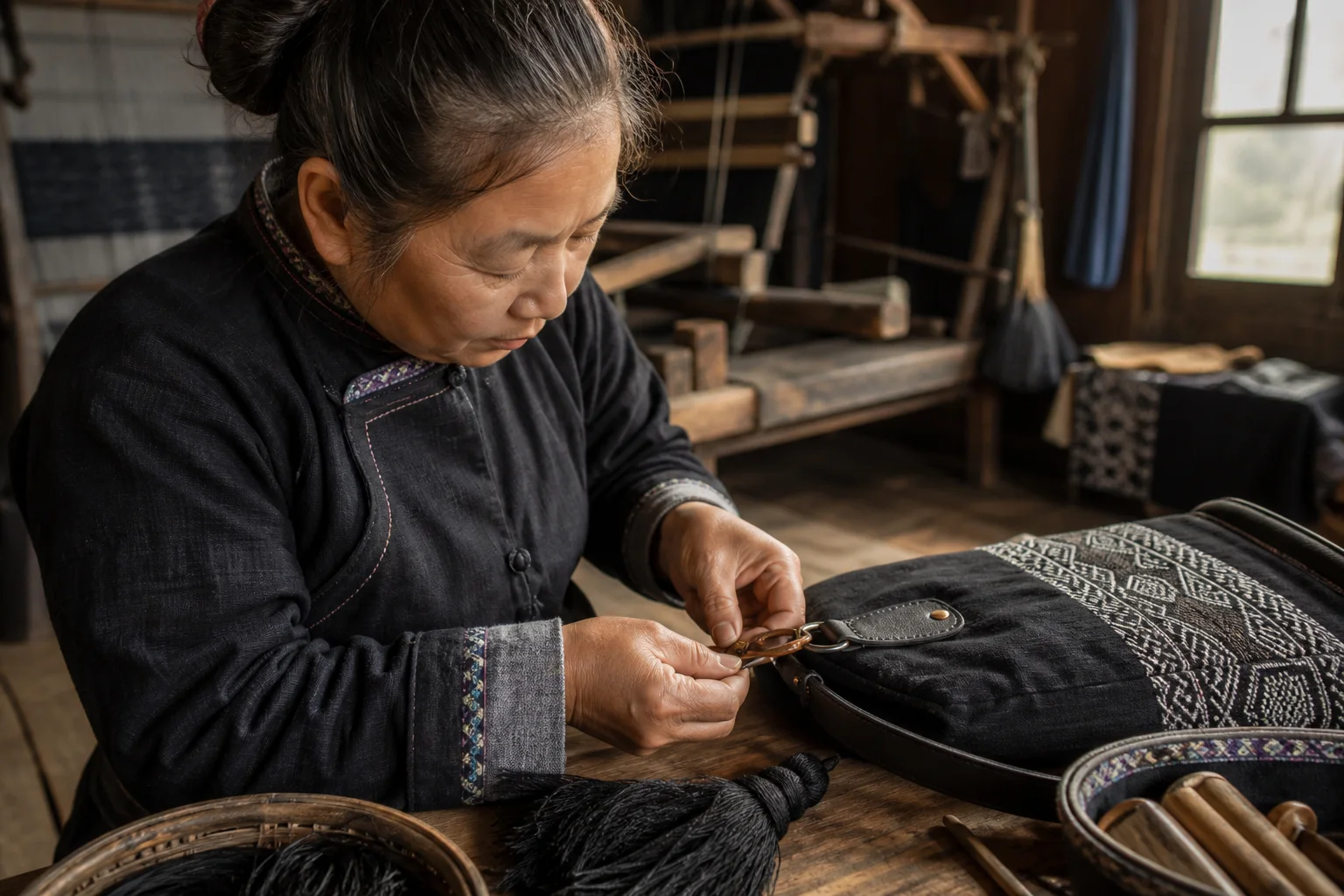
Textile, lining and hardware are brought together; edges, stitches and ornament are checked by hand before the piece leaves the studio.
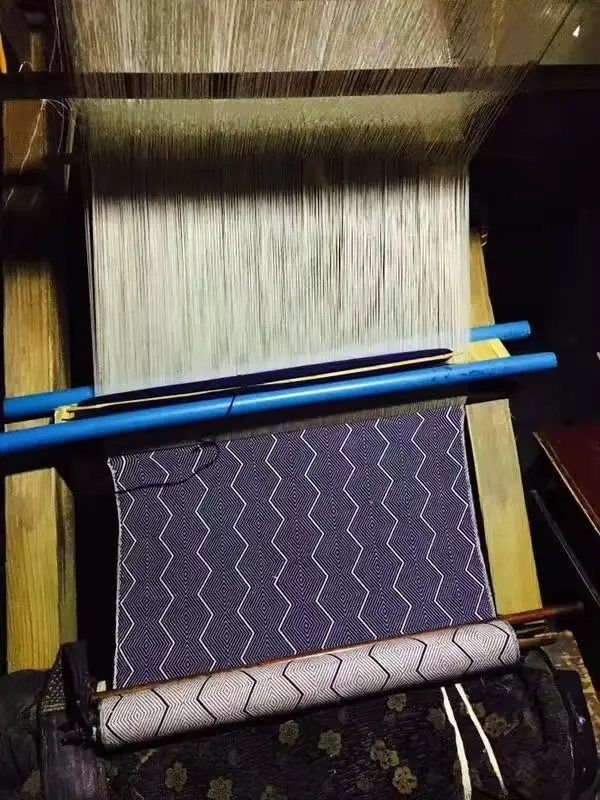
The band
The black-and-white band on the Riverline bags is woven on this kind of loom. Each band is then cut, aligned and stitched into the body of the bag, so small shifts in rhythm are part of the cloth.
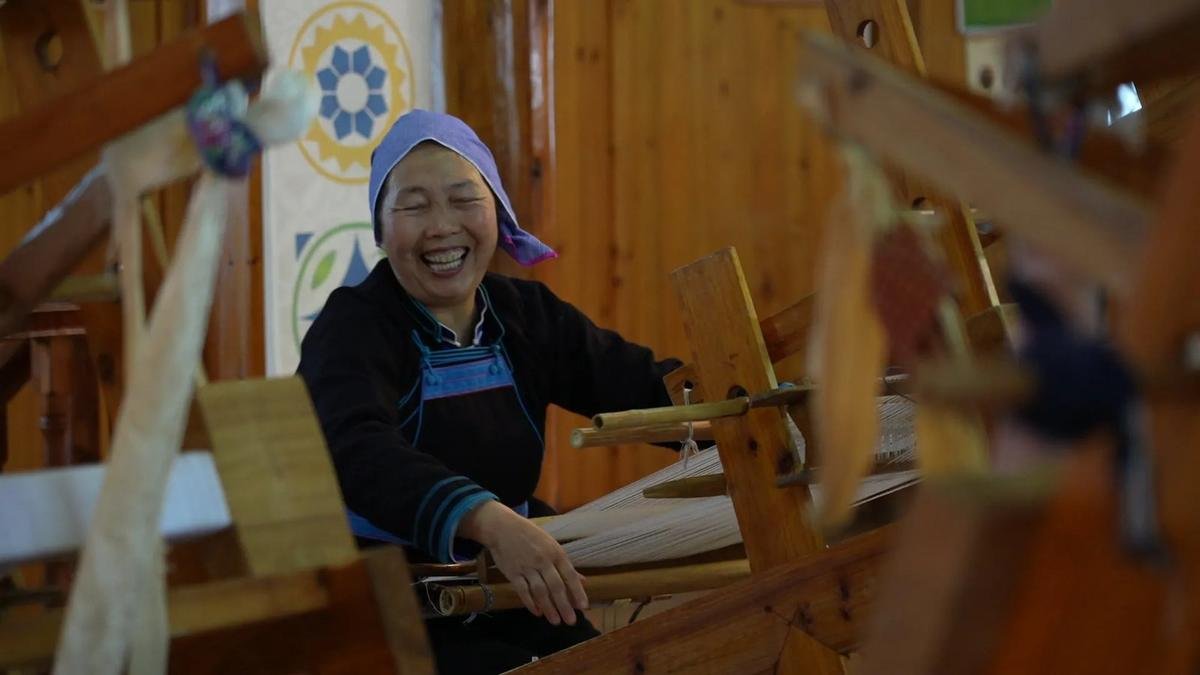
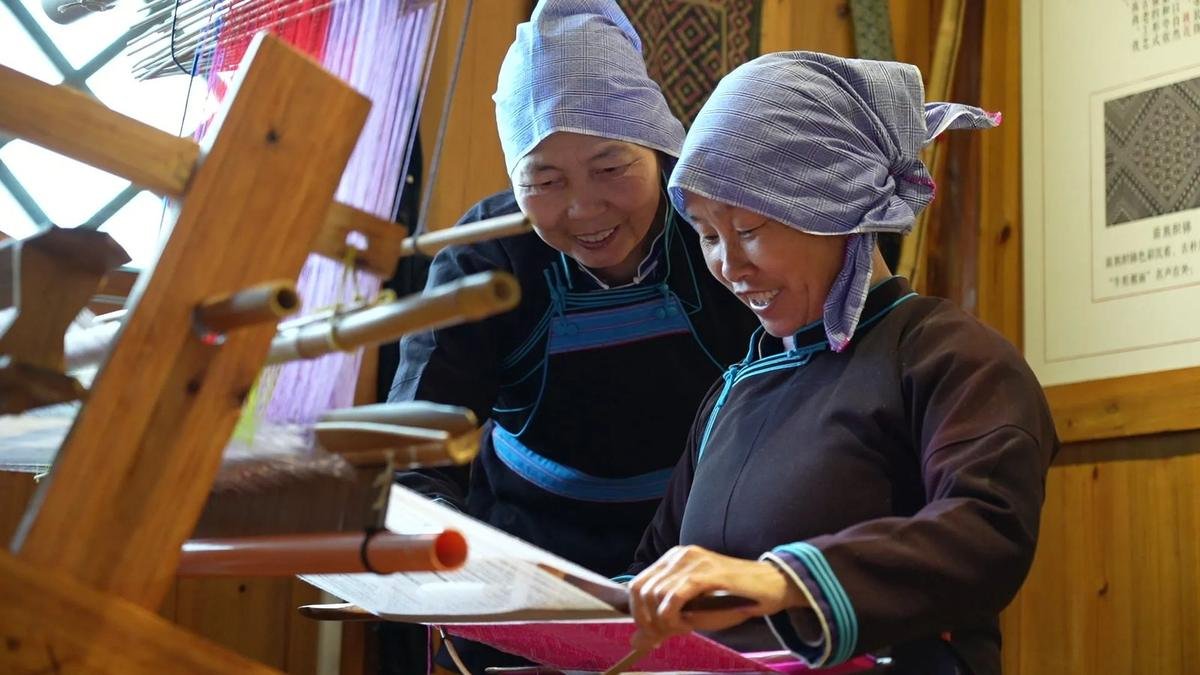
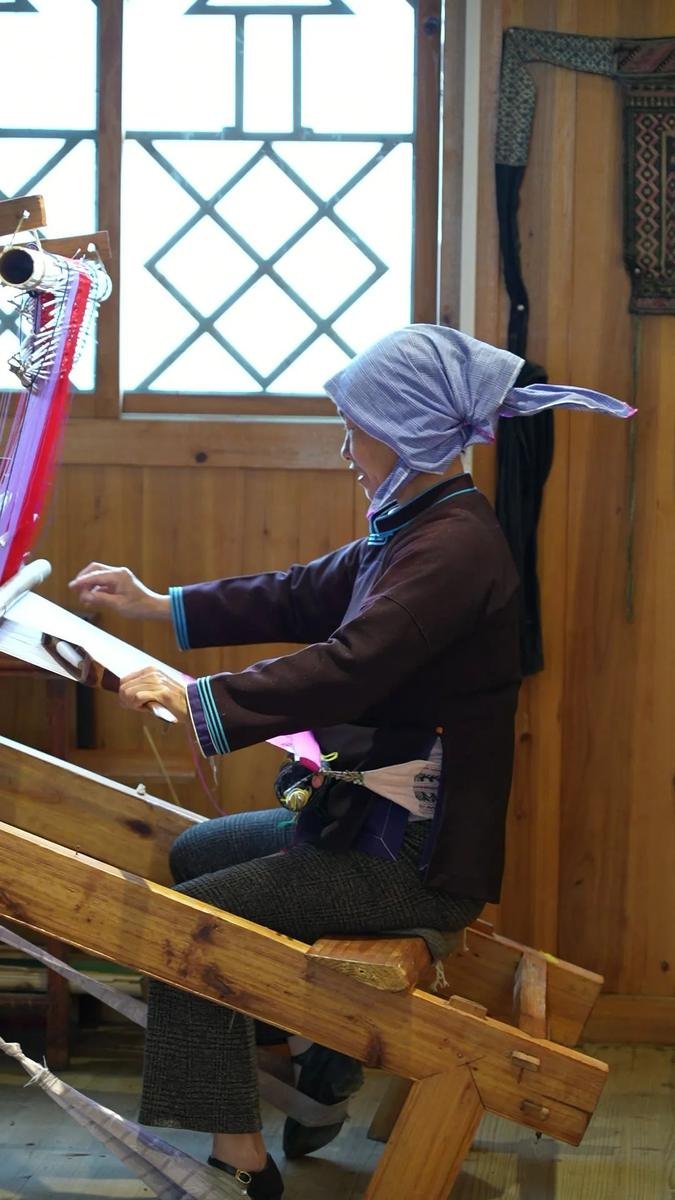
Weavers at the Yunbuyao Dong brocade base in Tongdao, Hunan.
Why it matters
Over ten years, the Tongdao base has trained more than 300 weavers. When the cloth is carried in daily life, the work of weaving continues to have a place.